
Tweet Overview
View this X/Twitter post from @JamesLucasIT published on 15 de maio de 2025 às 22:43. This post contains 15 images.
15 details from one of history's most mysterious paintings - a thread on the Arnolfini Portrait🧵

1. Just 5.5 centimeters wide, the mirror in Van Eyck's masterpiece reflects the whole room, showing the couple from behind and two others: one of whom might be the artist himself.

2. There’s more to this painting than meets the eye...

Let's start with their often debated joined hands: some see a marital vow, others a contract granting the wife business authority.

Arnolfini’s raised hand indicates oath-taking, with their hands joined in consent.

3. The extinguished candle above the wife subtly implies her death, lending weight to interpretations of the painting as a memorial portrait.

In contrast, only one candle remains lit — positioned above Giovanni's head — symbolizing that he, unlike his wife, is still living.
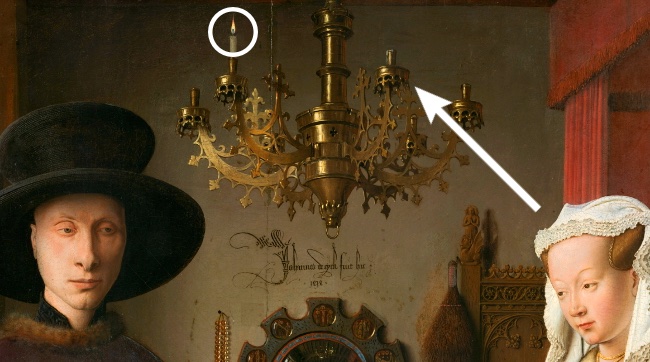
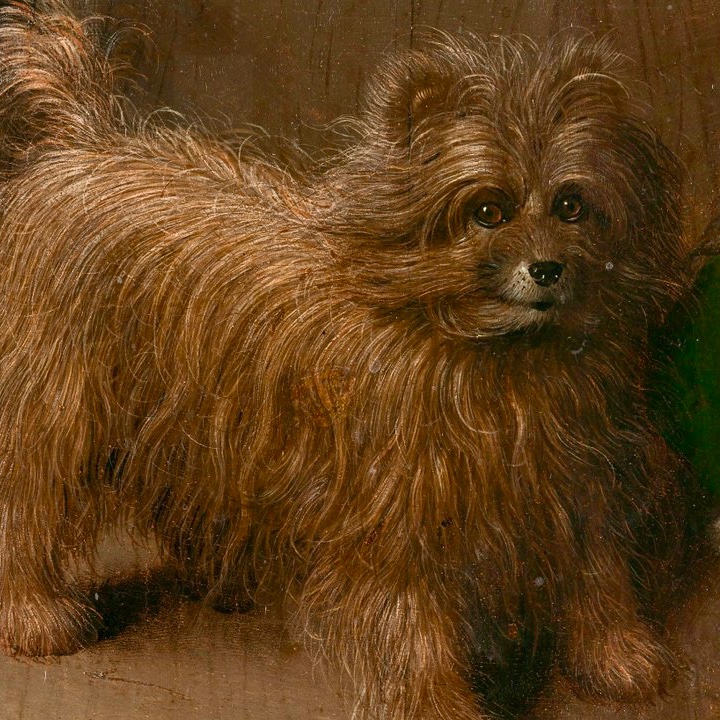
4. At the couple’s feet rests a small dog.

Beyond its charm, the animal embodies loyalty and fidelity, reinforcing the marital bond likely depicted in the room.

Remarkably, each of its hairs appears to have been rendered with a single, delicate stroke of van Eyck’s brush.
5. The convex mirror at the back features ten painted medallions depicting scenes from Christ’s Passion.

Furthering the Memorial theory, all the scenes on the wife's side take place after Christ's death.
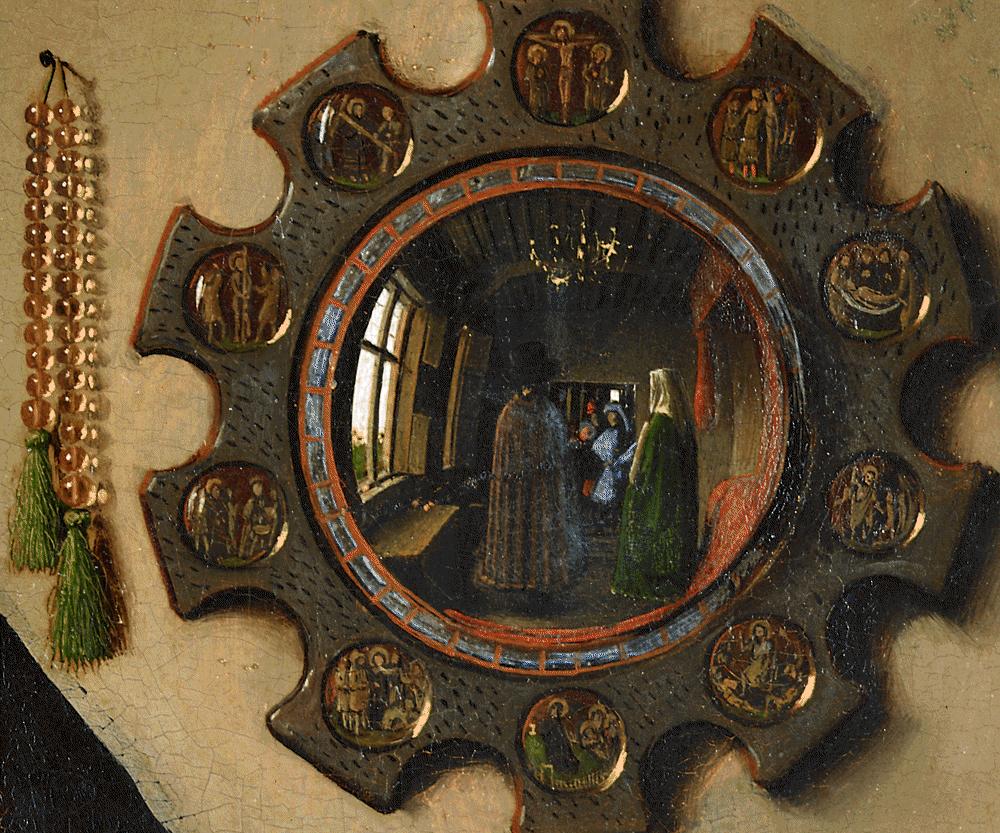
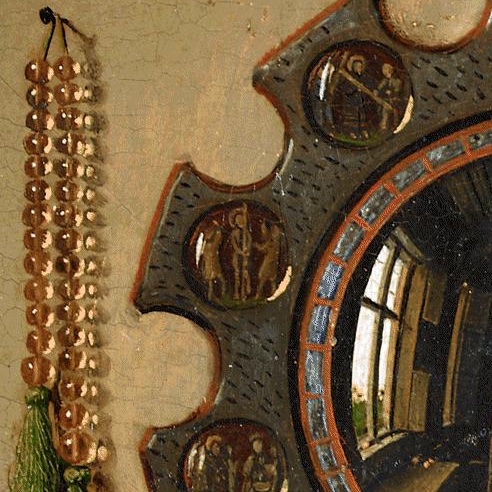
6. Van Eyck’s precision extended to microscopic highlights — some scholars propose he used a magnifying glass to render the individual beads of amber beside the mirror.

Each one casts a delicate shadow on the wall and reflects the ambient light of the room.
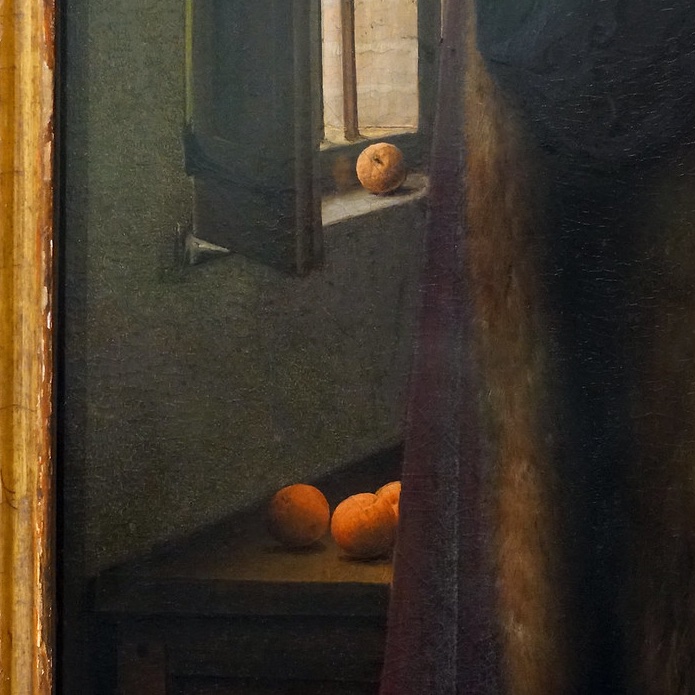
7. A few oranges rest near the window.

These were rare and expensive imports in 15th-century Burgundy, hinting at the couple’s wealth.

The artist has masterfully rendered the shadows they cast, even including a faint orange reflection next to the one on the windowsill.
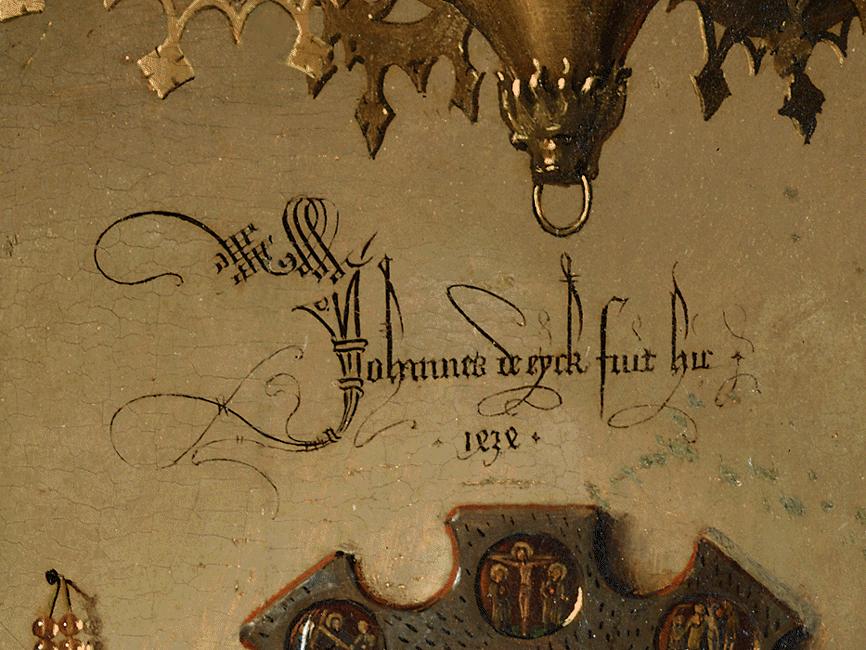
8. Directly above the mirror is the inscription “ Johannes de eyck fuit hic 1434” (“Jan van Eyck was here 1434”).

Far more than a signature, it seems to suggest that the artist likely stood in this very room, immortalizing the moment in paint.
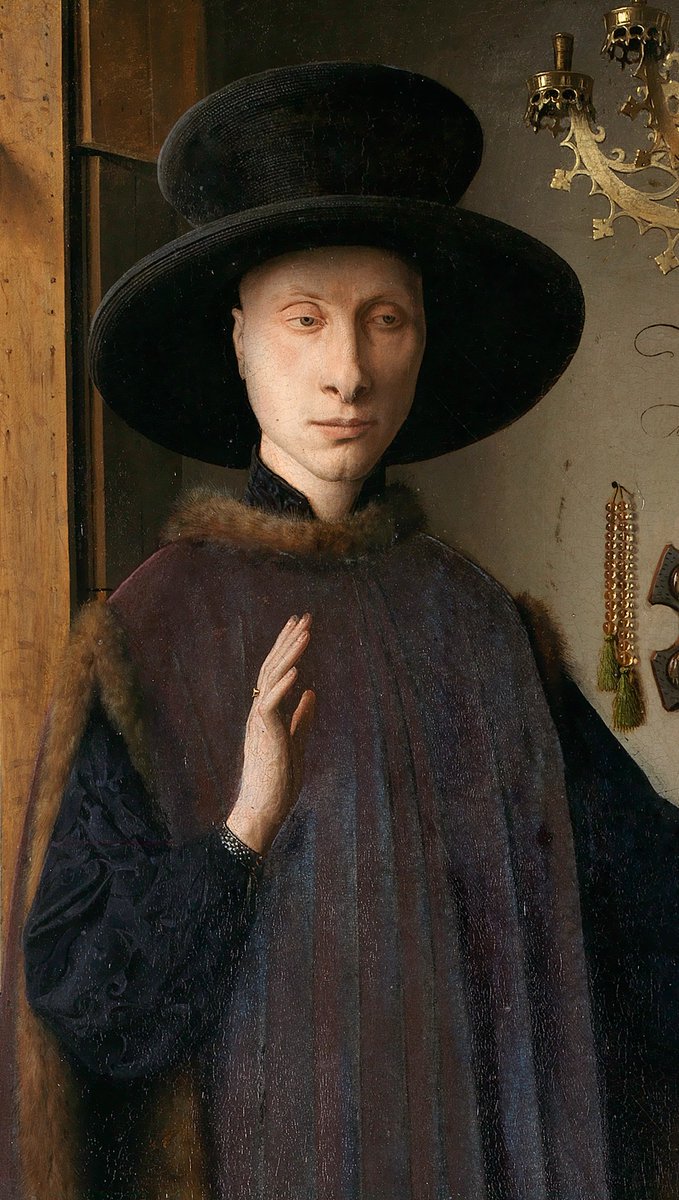
9. Detail showing the male subject, probably Giovanni di Nicolao Arnolfini.

The wealthy Italian merchant’s straw hat, plaited and dyed deep black, reflects the summer fashion of the time.
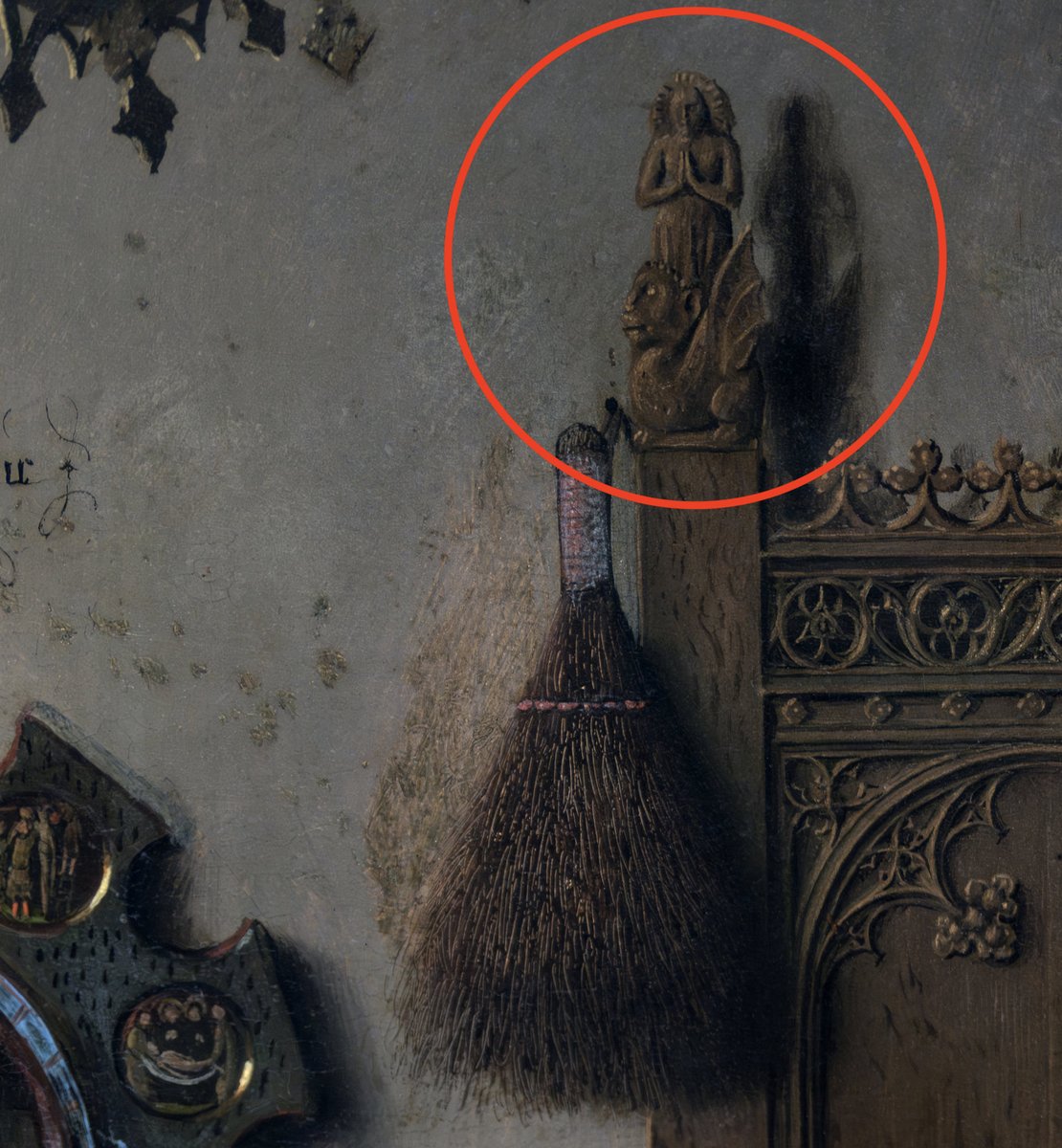
10. Though the wife is often presumed to be pregnant, scholars generally reject this view.

However, a carved figure appears as a finial on the bedpost, likely representing Saint Margaret — the patron saint of pregnancy and childbirth — who was often invoked to cure infertility.
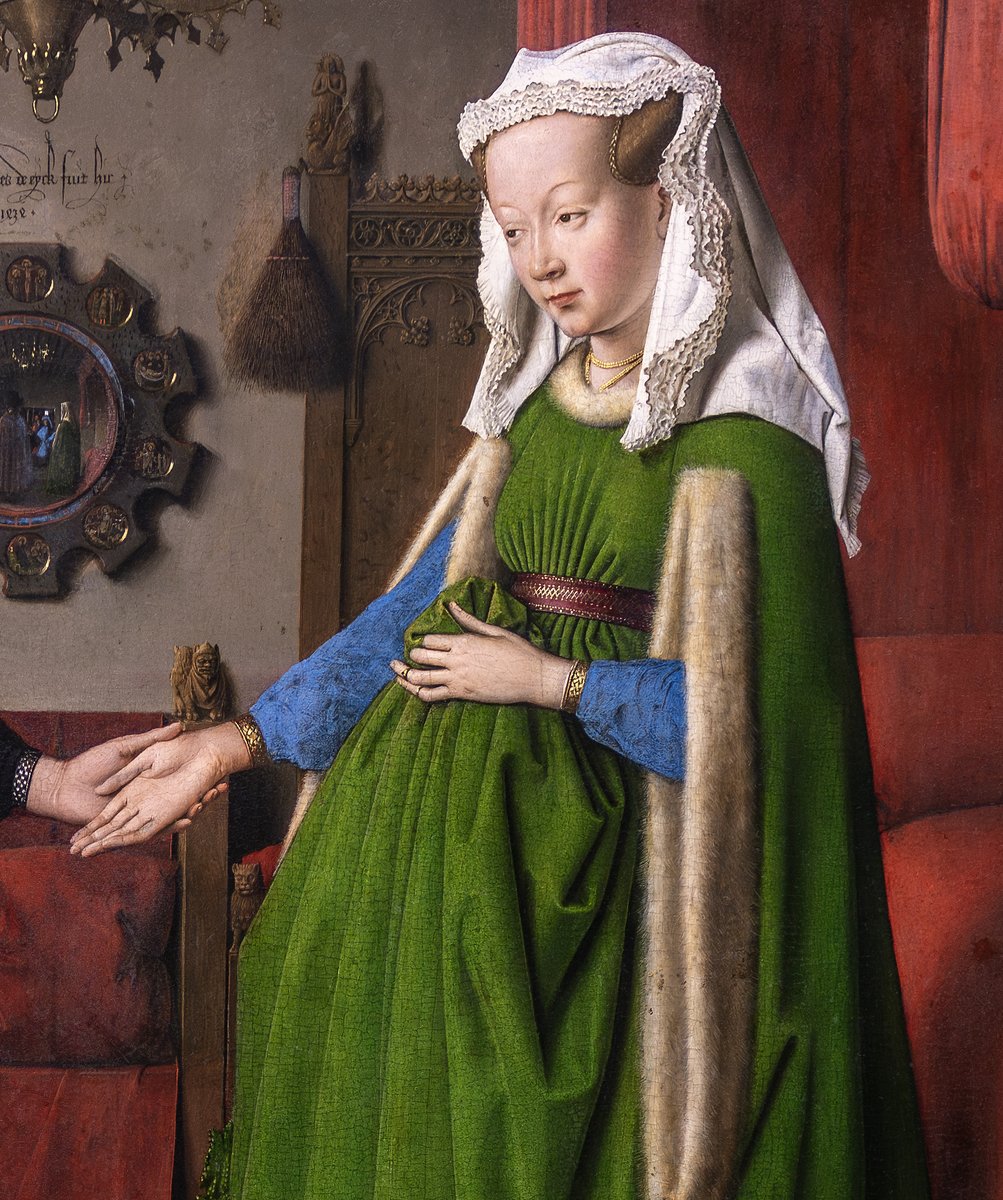
11. Art historians believe this style was fashionable for women’s dresses at the time.

Fashion would have mattered to Arnolfini, especially as a cloth merchant.

The more fabric someone wore, the wealthier they were assumed to be.
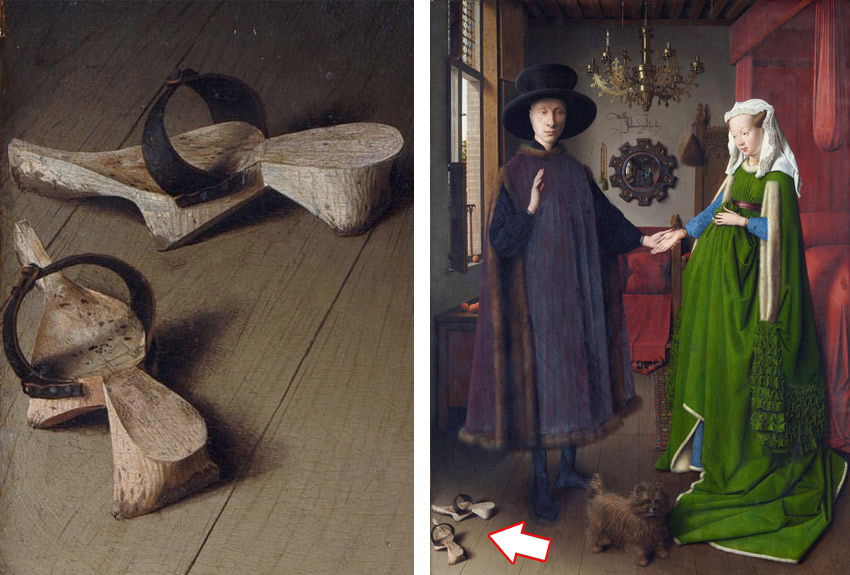
12. The male subject’s pattens, protective over-shoes, were removed, implying he would remain faithful to his wife and not remarry — possibly for religious reasons.

This supports the idea that the female subject was painted posthumously.
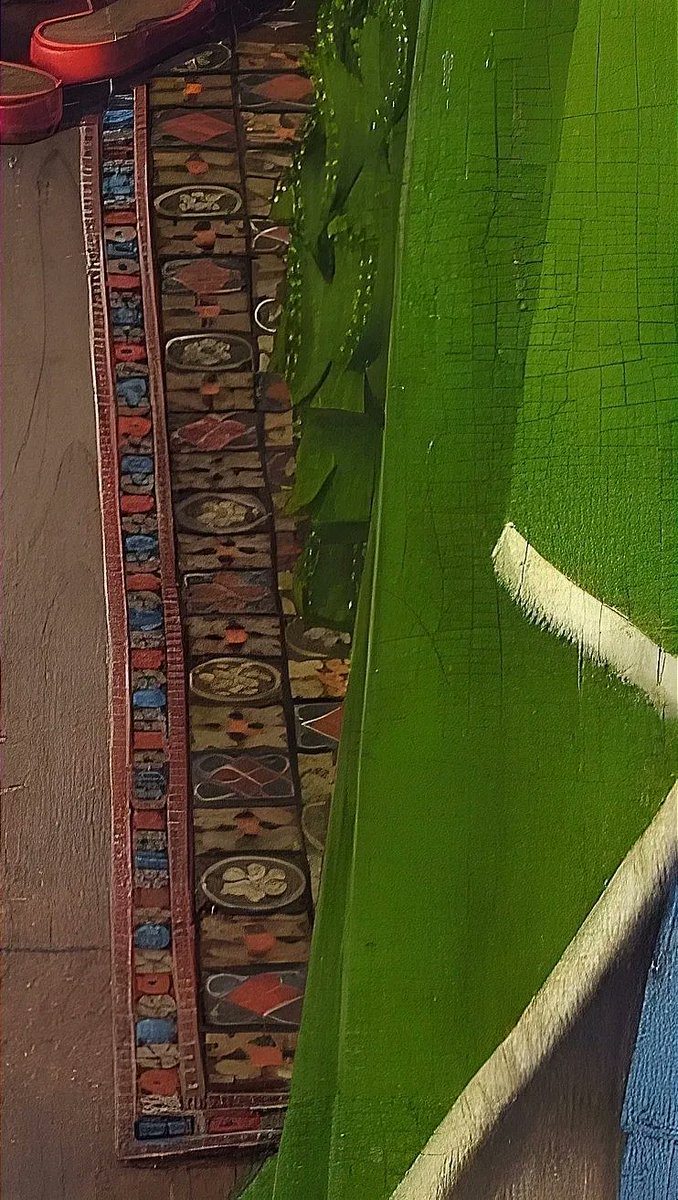
13. A small Oriental carpet lies beneath the bed, rather than on a table as was more common (and still is in the Netherlands).

Its presence signals the couple’s refined taste and access to luxury trade networks.
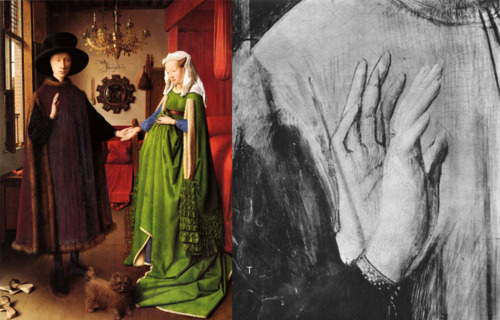
14. Infrared reflectography has revealed "pentimenti" in the underdrawing: alterations to hands, faces, the mirror’s frame and other elements.

These revisions are a testament to Van Eyck’s relentless pursuit of compositional perfection.
15. The artist also employed multiple layers of translucent oil glazes and wet-on-wet blending to achieve luminous, three-dimensional forms.

This technical innovation allowed him to capture subtle shifts in light and texture with unprecedented realism.

Thanks for reading till the end!

If you enjoyed this thread, you’ll definitely love my latest newsletter article.

Some of the most incredible painting details in art history:

https://www.james-lucas.com/p/the-unreal-details-of-mind-bending


